For property owners in the San Francisco Bay Area, 2026 marks a significant shift in the regulatory environment. As the
CA Landlord and Tenant Law evolves, staying compliant is no longer just about good service—it is about legal survival. This guide outlines the critical changes every owner must understand regarding their
Residential Lease agreements and daily operations.
New Statewide Mandates for 2026
The "baseline" for habitability has expanded significantly this year. Under
AB 628, a dwelling is now legally considered uninhabitable unless it includes a functional stove and refrigerator. Should these appliances fail, owners are strictly mandated to repair or replace them within 30 days.
Furthermore, financial structures for new tenancies have changed under
AB 12,
which now limits all security deposits to a maximum of
one month’s rent, regardless of whether the unit is furnished or unfurnished.
Regional Compliance: From Hayward to the Peninsula
Navigating local ordinances requires a hyper-local approach, as rules vary significantly by city:
- Hayward: Properties built before 1979 fall under the RRSO, which currently caps annual rent increases at
5% and requires mandatory mediation for disputes.
- San Leandro: This area maintains a "ceiling" on increases at the lower of
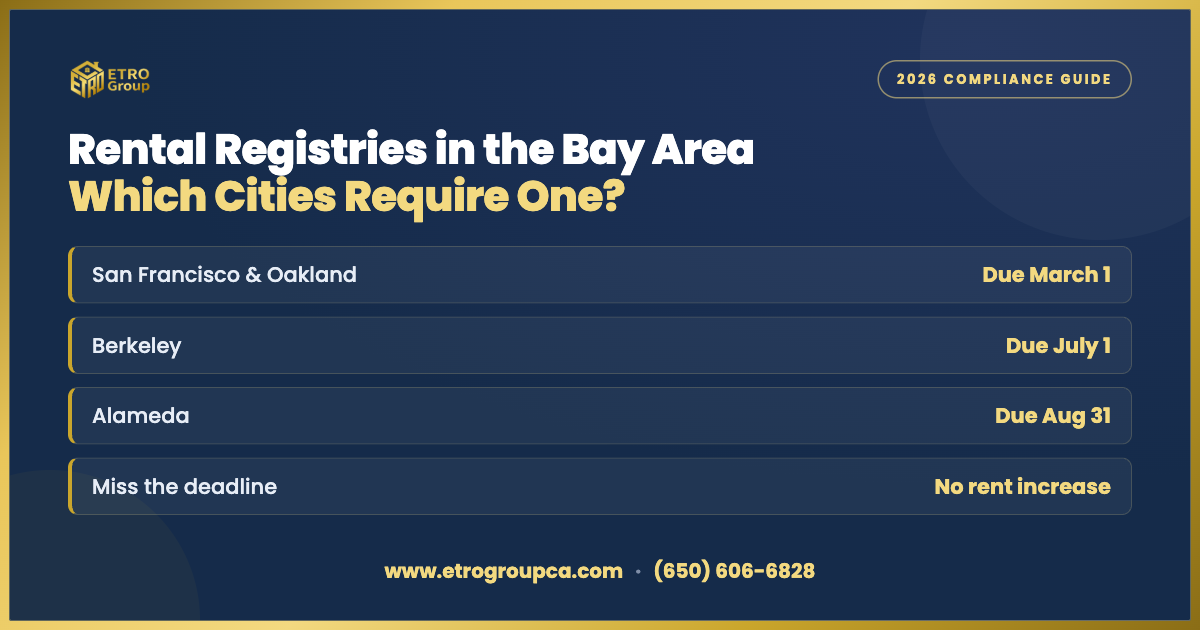
3% or 65% of the CPI. Crucially, units must be registered by July 31; failure to register results in a complete freeze on
rent increases.
- San Francisco: For the 2026–2027 cycle, the allowable rent increase is set at a modest
1.6%, and owners must pay
4.2% interest on
security deposits held.
- Unincorporated Eden Area: In regions like
San Lorenzo and Cherryland, "Fair Chance Housing" laws now strictly prohibit inquiring about or using an applicant’s criminal history during the
screening process.
Transparency and the "Junk Fee" Ban
Under
AB 1248, transparency is the new standard. Every potential cost—including parking, pet rent, and late fees—must be disclosed upfront in all advertisements and lease documents. Failure to disclose these can result in "triple-damage" penalties.
Additionally, for those owning single-family homes or condos, the
AB 1482
exemption is not automatic. To maintain your right to market-rate increases, a specific legal notice must be physically present within the lease agreement.
Why Hire a Professional Property Manager?
While many owners consider
self-management to reduce overhead, the complexities of 2026 legislation make a
professional
Property Management
firm a vital asset.
- The Legal Shield: With the introduction of "Affirmative Defenses" for tenants on government benefits (AB 246) and strict
"Just Cause" eviction requirements, a single procedural error can lead to months of lost income and costly litigation. A professional
Property Manager acts as your first line of defense, ensuring every notice and lease term is legally sound.
- Mitigating the "Headache": From managing the new
AB 2747 rent reporting requirements to coordinating high-resolution photo evidence for damage deductions (AB 2801), the administrative burden has never been higher.
- Digital Precision: Professional firms provide a digital audit trail. By digitizing vendor invoices and providing real-time portal access, they ensure that your investment is handled with the transparency and precision required by modern California law.
In this era of "The Registry Trap" and shifting appliance mandates, professional oversight is no longer a luxury—it is a strategic necessity for protecting your real estate assets.